Step
1: Clean
the radiator
Step
2: Place
a drain pan
Step
3: Remove
the radiator pressure cap
Step
4: Inspect
the pressure cap & hoses
Step
5: Drain
the radiator
Step
6: Rinse
the radiator
Step
7: Add
the coolant and water mixture
Step
8: Bleed
the system
Step
9: Replace
the pressure cap
Step 10:
Clean up
Step 1:
Clean the radiator
Make sure the engine is cool before you
start.
Your vehicle's cooling system sucks in air
as you drive, which means insects, dirt
and leaves can be pulled into the fins of
the radiator fan. This condition prevents
air from passing easily through the
radiator, and can cause your car to
overheat.
Using a hose with a nozzle, a bucket of
soapy water and a soft nylon brush, loosen
the insects, leaves and other debris.
Gently brush with the direction of the
fins of the radiator fan, not against it.
These thin metal fins are fragile and can
be bent with this action if you're not
careful.
Follow this gentle cleaning with a gentle
stream of water on the front and rear of
the radiator. Don't turn up the hose to
full pressure--a concentrated blast of
water can be actually bend the fins of the
radiator.
In general, you should clean the radiator
fins every 12,000 miles (19,000 km). Don't
do it when the engine is hot, cold water
can damage a hot engine. Wait until the
engine has cooled before you start
cleaning.
back
to top
Step 2: Center drain pan under the drain
spout
Never allow coolant to drain out onto the
ground. Its sweet smell attracts animals
that will drink it. Don't leave it to
drain unattended in a pan for the same
reason. Another way to protect wildlife
from accidental spills is to use
antifreeze that utilizes propylene glycol,
instead of ethylene glycol. Antifreeze
that is made with propylene glycol, such
as SIERRA® Antifreeze is safer for pets
and people.
The pan should be big enough to hold the
coolant, but not so deep that it doesn't
lie flat or slide easily under your
vehicle. Tipping a pan on its edge (to
slip it into position) is a bad idea. It
will only lead to spills.
back
to top
Step 3: Remove the radiator pressure cap
Cover the radiator cap with a rag. You've
made sure the engine is cold, but go
slowly anyway. Most radiators now have a
fill spout that is slanted slightly
towards the windshield of the vehicle to
avoid mishaps, but caution is never
wasted.
With the heel of your
hand, press down
firmly, turn the radiator cap a quarter
turn to the left. You'll feel the cap is
loose when you move it, but it's still
locked on. (This first turn is to release
any pressure in the radiator.)
Then, pressing down once more,
turn the
cap another quarter turn to the left and
take it off.
back
to top
Step 4: Inspect the pressure cap, clamps
& hoses
The radiator cap acts as more
than just a lid for your radiator; it
keeps your engine cool by sealing and
pressurizing the coolant inside. And not
all caps are the same--they are made to
maintain a variety of pressure, depending
on the size and type of engine. How do you
know the pressure rating of your cap? It's
written on the top of the cap. When you
replace it, make sure you get one that has
the same rating. When you buy a new one,
take the old cap into the store with you
if you aren't exactly sure.
You will notice that the cap has
three
main features. The wider top of the cap,
the smaller seat at the bottom (with a
rubber seal) and a spring coil in between.
This spring is what seals the cap to
maintain pressure. If you squeeze the seat
and the top together, and it's very easy
to compress the spring, then replace the
cap. It isn't doing its job. If your cap is
rusted or the rubber seal
is dried out, it should be
replaced.
There
are two radiator hoses you'll want to
check. The hose at the top of the radiator
carries the hot coolant away from the
engine, and the hose at the bottom carries
the cooled coolant back to the engine.
These hoses may be on either side of the
radiator, but they're always opposite each
other.
Inspect the radiator hoses for leaks,
cracks or soft, mushy condition. Look for
signs of rust on the clamps that hold the
hoses. If you find one bad hose, the other hose
will probably go bad in the near future.
Because the coolant must be drained to
replace the hoses, it makes sense to
replace both at the same time. But don't
actually replace the hoses until you drain
the radiator.
back
to top
Step 5: Drain the radiator
To drain the radiator, you'll need to
locate the radiator's drain valve. You'll
find it on the bottom of the radiator. Pay
attention to how much drains from
radiator. It will indicate much you will
need to replace later on.
Open the drain valve. As you open this
valve, the coolant will start to flow from
the radiator into the drain pan you placed
below it.
Allow enough time for all of the coolant
to drain out, and then close the drain
valve.
Using the
funnel, pour the drained coolant
into a container that meets the disposal
regulations in your area. Set it in a safe
place while you continue this project.
back
to top
Step 6: Rinse/Flush the radiator and
cooling system
Oddly enough, the actual
rinsing of the radiator is the easiest
part of the entire operation. Your garden
hose does all of the work--you just pay
attention to the color of the rinsing
water as it leaves the radiator.
Take the garden hose and insert it into
the fill spout.
With the radiator drain valve
closed, fill
the radiator until full. Then open the
drain valve and drain it once again.
Important: collect this first rinse and
dispose of it in the same manner as the
drained coolant. That is, add it to the
disposal containers that you have for Step
5.
If the drained water is
clear, close the
drain valve and move onto Step 7. If it
appears rusty, continue filling and
draining until the water is clear. After
the first flush, it's all right to let the
rinse water drain on to the street.
Close the drain valve.
back
to top
Alternate Step 7: Rinse and replace a hose
Have you removed the bottom hose to
replace it? Don't put the new one on until
you've rinsed out the radiator. In this
case, you want to rinse the radiator with
the petcock always closed. (If you're
replacing a top hose, go ahead and replace
the hose and follow the procedure
described above).
Hold your gloved hand over the hole on the
radiator where the bottom hose attaches.
Fill the radiator with the hose.
Release your hand quickly. The water will
gush out and any rust or mineral deposits
will escape through the larger opening of
the hose. Repeat this until the water runs
clear.
Replace hoses and clamps as needed.
Fortunately this is a simple matter--just
unscrew the old clamps on both ends of
each hose, and the hoses come right off.
And installling the hoses is the same
motions in reverse.
| Step 7: Add the coolant and water
mixture
|
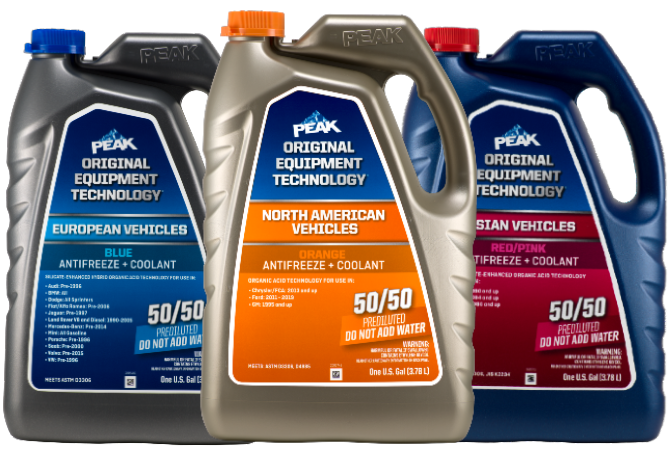
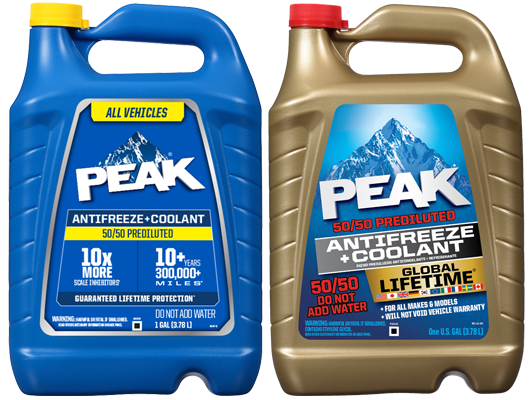
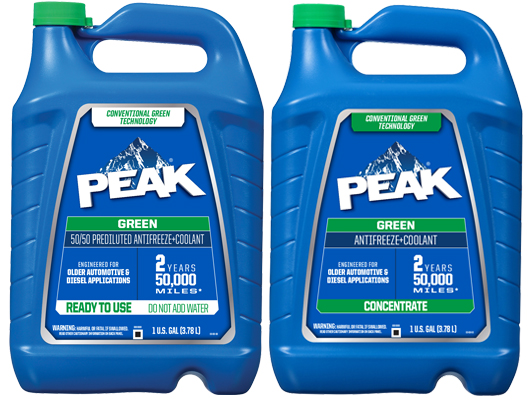
| The optimum coolant combination is
a 50/50 mixture of antifreeze and water.
The 50/50 mixture will produce freeze
protection down to -34F (-36C), and
boilover protection up 265F (129C).
However, in colder climates, where lower
temperature freeze protection is needed, a
mixture of up to 70% antifreeze can be used. Although regular water will do, the
refilling of the system should be done
with distilled water. Distilled water
doesn't contain any minerals which can
dissolve and cause scale and deposits in
your cooling system. |
|
 |
|
Protection Chart
(click to enlarge) |
|
There are three ways (at least) to refill
the radiator:
Fill the radiator halfway with water.
Can't see into the radiator? Estimate the
amount of water based on the amount of
coolant that you drained out. If you
drained out two gallons (8 liters) of
coolant, then you need to add one gallon
(4 liters) each of water and antifreeze.
Using a
funnel, fill up the radiator with
antifreeze.
A second way:
In a separate clean
container, mix
antifreeze and water in a 50/50 ratio.
Add the 50/50 mixture until the radiator
is full, and store any extra coolant.
A third way:
Pour in a half container of antifreeze.
This usually comes in one-gallon (4 liter)
containers, so add a half-gallon (2
liters).
Add to the radiator an
equal amount of a
distilled water. Then mix water into the
antifreeze container (which still has
antifreeze in it). This will create the
50/50 mix, which you can add to the
radiator until it's full.
It's good idea to have a little extra
coolant after this fill-up, because the
coolant level will drop slightly after you
do Step 9. The excess from this step can
be used to top off the radiator a little
later.
back
to top
Step 8: Bleed the system
It's likely that pockets of air will be in
the cooling system after you've refilled
the radiator. The system is self-bleeding
when you follow these steps:
Start your engine, but
leave the radiator
cap off so the pressure doesn't build up.
Let the engine run until it reaches its
operating temperature of about 190F (88C).
This'll take about 15 minutes.
Turn on your heater and set the
temperature control to hot. This will
circulate the coolant and any air in the
heater lines and core.
Check the level of the coolant. You may
find that the level has gone down some.
How did that happen? The air trapped in
the radiator kept the level artificially
high; when this air was released, it
opened up more space in the radiator, and
allowed more antifreeze into the system.
Add more water and antifreeze, in the same
50/50 ratio, to fill the space left by the
bled-out air.
As the air bleeds out, the coolant may
bubble and spit from the opening on top of
the radiator. Use caution--that coolant is
hot.
Allow the engine to cool. Then check the
freeze/boil over protection with an
antifreeze tester. Add more antifreeze or
water to the system as necessary. Don't
forget to clean out and refill your
coolant reservoir with a 50/50 mixture of
antifreeze and water as well.
back
to top
Step 9:
Replace the pressure cap
Basically, this
isn't too tough--you replace the cap in
reverse of how you removed it. It's
important, however, that you get it on
tightly. The cap has two wide tabs,
opposite each other on the cap, hanging
down slightly. Measured across, each tab
is about one quarter of the circumference
of the cap. The fill spout, where you
poured in the coolant, has two notches or
cutouts that match up with the tabs of the
cap.
Match the tabs with the cutouts on the
fill spout. Press down firmly on the cap
and turn it to the right a quarter turn.
Give it a jiggle to be sure it's in place.
Though the cap shouldn't be tight at this
point, you shouldn't be able to lift it
off, either.
Turn the cap another quarter turn to the
right, still pressing down, until you feel
it lock into place. It should be locked
tight now and won't move if you try to
wiggle it.
back
to top
Step 10: Clean
up
Check for spills of
antifreeze, cleaner or coolant mixture.
Use the hose to dilute any spills that
might have inadvertently occurred.
Dispose
of old clamps and hoses.
All rule and regulations should be
observed when disposing of
antifreeze/coolant and radiator fluids.
Call the EPA or the office of your state
or local enviromental agency for details
on disposal procedures.Until then, put the
containers up out of the reach of children
and animals.
Congratulations, you've just protected
your engines cooling system for at least
the next two years!
back
to top
-end-
|