Subject: Extended Life Coolants
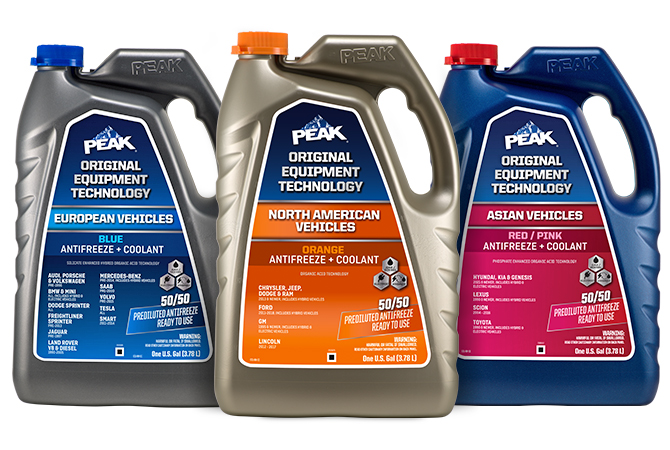
Recently the antifreeze market experienced a major advancement, the development of the Extended Life Coolant (ELC). In this type of coolant organic acid salts replace traditional corrosion inhibitors. This new organic acid technology (OAT) represents several major improvements over "conventional" antifreeze technology. As with any new technology, introduction of this new type of antifreeze has caused some confusion. We will explore extended life coolants and go over some of the more common questions asked about this new technology.

In all antifreezes the corrosion inhibitors comprise only a small portion of the total formulation. For this reason the main portion of extended life antifreeze is the same as conventional antifreeze. Conventional antifreezes use inorganic additives to achieve corrosion protection. These inhibitors include silicates, phosphates and borates. Extended Life antifreezes attain corrosion protection by the incorporation of organic acid salts. The main portion of all modern antifreezes is either ethylene or propylene glycol. Because the base of both types of antifreeze is the same, the heat transfer properties, freezing  protection and boil over protection do not
change when switching between conventional and extended life coolants.

The major performance difference between extended life and conventional antifreeze is the life-span of the product. Conventional antifreeze lasts only two or three years due to depletion of the antifreeze corrosion inhibitors. Because the corrosion inhibitors are different, automobile extended life antifreezes last five years or 150,000 miles. Heavy-duty extended life antifreezes last between 400,000 and 600,000 miles with the use of a one time extender.

Because the chemistry is different in conventional coolant and ELC, it is not advisable to mix the two products. Although the antifreezes are compatible, the inhibitors do not work together. Topping off ELC with conventional coolant dilutes the corrosion inhibitors in the ELC, reducing the usable life of the coolant to that of a conventional antifreeze. Likewise, topping off conventional coolant with ELC does not impart extended life characteristics to the conventional coolant. In an emergency situation, when extended life antifreeze is not available it is advisable to top off with water to hold you over until you get more ELC. When switching between a conventional coolant and an ELC it is a good idea to flush the old coolant from the vehicle before filling with the new coolant. As mentioned above compatibility between the coolant types is not a problem, but the more old coolant left in the system, the less extended life properties the new coolant will have.

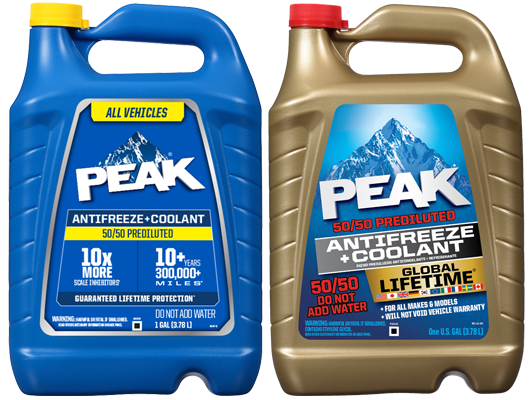
Old World Industries manufactures two extended life antifreezes. PEAK Globalâ LifeTime™  features a patented, advanced organic acid technoloy for automobiles and light-duty trucks that, with a complete flush and fill, provides a LifeTime protection guarantee - for as long as you own the vehicle. Final Chargeâ antifreeze is a red colored heavy-duty antifreeze. Because it is organic acid based, Final Charge antifreeze does not require SCAs when used in heavy-duty applications. Elimination of SCAs greatly reduces the cost and variability associated with heavy-duty cooling system maintenance.

As with any new technology, extended life coolants have caused some confusion. This confusion will wane as consumers become more familiar with this technology. Extended life coolants represent a major advancement over conventional coolant technology. Over the coming years this technology will replace conventional antifreeze and become the industry standard.


<Previous   Next>

Ethylene or Propylene Glycol Based Antifreeze | Antifreeze with Phosphate Inhibitors
The Blending of Antifreeze | Importance of Supplemental Additives in Diesel Coolants
Extended Life Coolants | Fully Formulated Antifreeze | RV Antifreeze